Building for the long game: lessons from Brazil's regulated betting market
A license goes live, marketing ramps up, and the business plan gets treated as settled. In Brazil's regulated betting market, that's often the moment things start to unravel.
Brazil's transition to a regulated iGaming market has been one of the most closely watched developments in the global betting industry. What looked from the outside like a straightforward licensing process has turned out to be far more demanding. Operators who treated regulation as a one-time hurdle to clear before scaling aggressively have often found themselves recalibrating faster than their business plans anticipated.
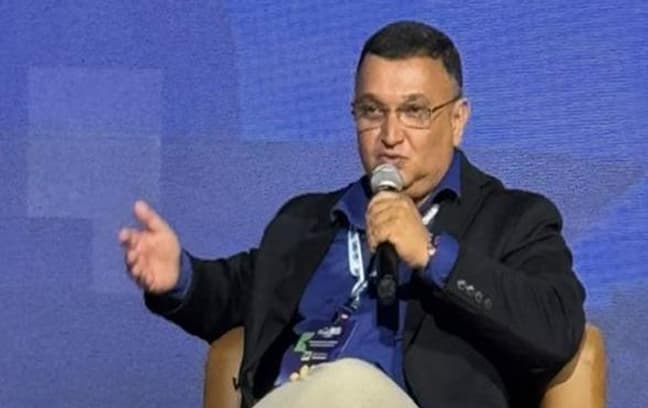
Few people are better positioned to unpack that reality than Waldir Marques. A lawyer and executive with experience across both the public and private sectors of the gaming industry, Marques has seen the Brazilian market from every angle - as a regulator, as the head of a state lottery operator, and now as an executive helping operators navigate the practical demands of compliance and sustainable growth.
In this interview, he shares what changed his own understanding of the regulated market, the early decisions that mattered most, the assumptions that didn't survive contact with reality, and what he'd do differently if he were starting an operation today.
Q: When did you realize the regulated Brazilian market was different from what you had imagined?
A: I think the main realization was understanding that the challenge in Brazil wouldn't simply be securing an authorization and putting a platform live. Regulation brought a level of operational complexity that much of the market hadn't initially anticipated.
Today, a betting operation has to be conceived, from its very inception, practically as a regulated company. Technology, compliance, AML, responsible gambling, customer service, advertising, payment methods, information security, and the relationship with the regulator are all completely interconnected.
Beyond that, the Brazilian market has its own particular characteristics. You can't simply import a successful model from another country. Consumer behavior, competition, acquisition costs, and above all, the dynamics of Brazilian regulation itself demand a far more adaptable operation.
Q: Which decision made in the first months most influenced the operation's success?
A: In my view, one of the most important decisions is understanding, from the outset, that technology and compliance aren't just requirements for going live - they're fundamental pillars of the business's sustainability and survival.
The platform is essentially the heart of the operation. It needs to meet not only commercial needs, but also regulatory obligations, internal controls, security, user experience, and the business's capacity to evolve. That's why choosing the right technology partners and establishing clear governance over those relationships is a strategic decision.
Compliance, in the same way, can't be treated as a mere regulatory requirement or an area created just to tick boxes. In a highly regulated market like Brazil's, compliance is a matter of company survival. A significant failure can generate not only sanctions and financial losses, but reputational damage, loss of consumer trust, and in more serious cases, threaten the very continuity of the operation.
That's why technology, compliance, and business need to be born and move forward together. Cutting corners or looking for shortcuts on those pillars early on can often mean a much higher cost down the line.
Q: Was there a business plan assumption that had to be abandoned quickly? What happened?
A: One assumption I consider dangerous in any business plan is imagining that the market will behave in a relatively stable way after regulation takes effect.
In Brazil, practically the opposite happened. Regulation is a continuous process. New rules, interpretations, technical requirements, court rulings, and consumer protection measures can rapidly change assumptions about revenue, acquisition, product, and costs.
That's why a business plan can't be treated as a snapshot. It needs to function as a living organism, with alternative scenarios and the capacity for permanent revision.
Q: What was the biggest lesson that no spreadsheet or projection could have anticipated?
A: That having money, technology, and a strong brand doesn't necessarily mean having a good operation.
Spreadsheets can project GGR, CAC, ARPU, margin, bonuses, and growth. What they struggle to measure adequately is an organization's ability to make fast decisions in the face of regulatory, technological, and consumer-behavior changes.
In the end, people, governance, and the capacity to adapt turn out to be just as important as capital and technology.
Another major lesson is that, in a regulated market, compliance can't be seen merely as a cost. A sustainable operation needs to build compliance and responsible gambling directly into its business model.
Q: Today, what would you do differently before launching a new operation?
A: I would dedicate even more time to the pre-launch phase.
Before discussing major investments in marketing and acquisition, I would run a genuine stress test of the business plan, particularly across five dimensions: technology, regulation, taxation, financial capacity, and consumer behavior.
I would also work with more conservative scenarios for acquisition and revenue, and more aggressive scenarios for regulatory and technology costs.
And perhaps the main change would be this: I would start with the operation I can actually sustain, rather than the operation I'd like to have.
In today's Brazilian market, I believe it's more important to build a solid, scalable, and regulatorily sustainable operation first, and accelerate growth from there. Growing fast matters; growing with control is essential.
Waldir Marques is a lawyer and executive in the gaming and betting industry, with experience across both the public and private sectors. He served as Undersecretary for Lottery, Prize, and Draw Regulation at Brazil's Ministry of Finance and as CEO of CAIXA Loterias S.A. He currently serves as Executive Director of TQJ - Todos Querem Jogar. Throughout his career, he has built experience from multiple perspectives within the industry, including regulation, operations, and the supply of technology and services to the gaming and betting market.